AI Transformation & Solutions Lead

Tal Ogen turns
manual work into AI. bottlenecks into pilots. pilots into daily use. manual work into AI.

Business process first, AI solution second.

I identify operational problems, find where AI can save time or reduce cost, and implement practical AI-enabled workflows. I connect AI agents to real business workflows through APIs, MCP, WebMCP, and automation - turning manual processes into usable AI systems.

Find repetitive work → pick the highest-value opportunity → implement → measure

Portrait of Tal Ogen

About

Six-plus years running complex operations - now applied to AI.

For more than six years at Sheba Medical Center I led complex biotechnology operations: process development and manufacturing programs for cancer cell therapy, the teams running them, and the cross-functional coordination around them - in a regulated environment where every step is documented and mistakes carry real consequences.

Today I apply that experience to AI, in two ways. For companies, I lead AI solutions and transformation: finding the problems worth solving, implementing the solution, and driving adoption. For small and medium businesses, I do the same as a practical consultant: show me how the business works, and I will find where AI can save time or money and help put it in place. The operations career is the advantage. I know what a real workflow looks like from the inside, where the bottlenecks hide, and why new tools get adopted or quietly abandoned.
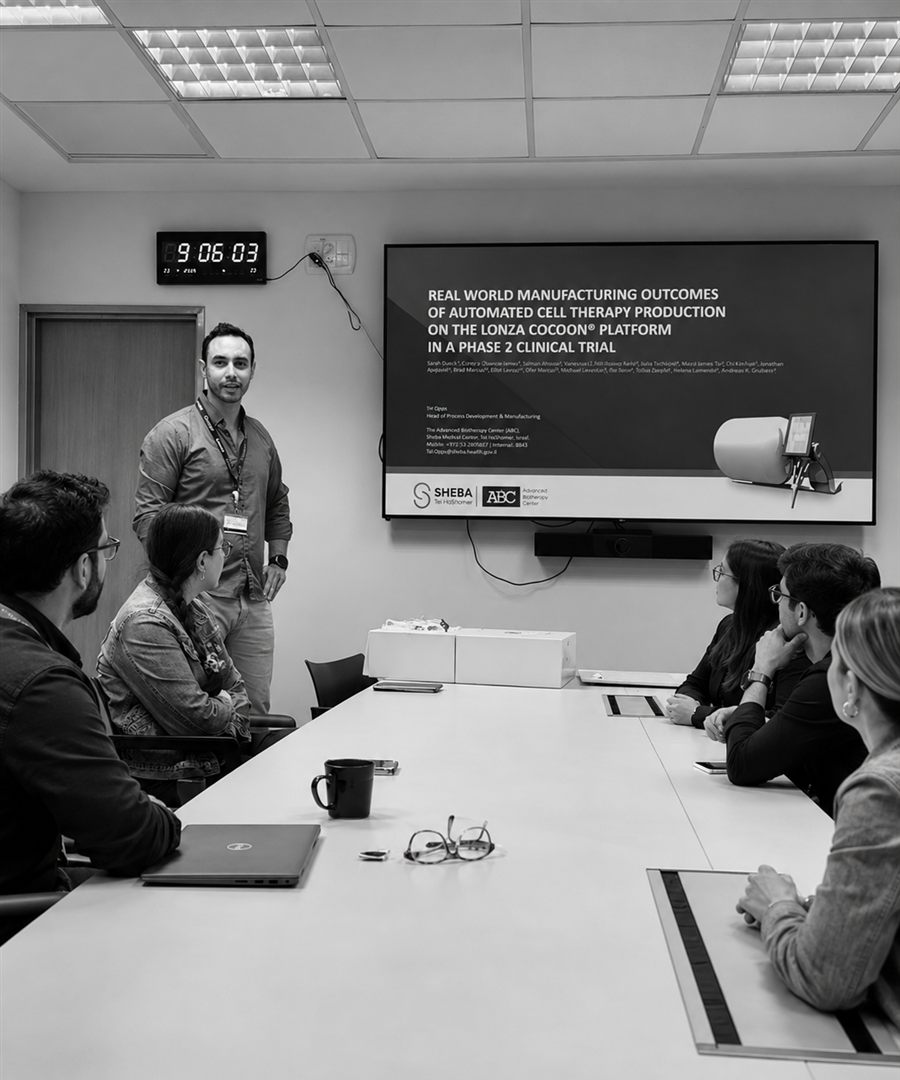
Tal Ogen presenting cell therapy manufacturing outcomes to colleagues at Sheba Medical Center
Presenting cell-therapy manufacturing outcomes at Sheba Medical Center

AI Transformation for Businesses

Show me how your business works. I'll find where AI can actually save time and money - and help implement it.

Find repetitive work → identify the highest-value AI opportunities → implement the solution → measure the result.

Business process first, AI solution second. I work with owners and operations leads of small and medium businesses to turn manual, repetitive workflows into practical AI-enabled ones - judged by the outcome, not by the tools underneath.

  1. AI Opportunity Call

    A working conversation about how the business runs: the workflows, the bottlenecks, the repetitive tasks, and where AI might realistically help.

  2. AI Opportunity Audit

    A structured look at the operation that ends in a short, prioritized list. It identifies:

    • Repetitive and manual work
    • Workflow bottlenecks
    • AI and automation opportunities
    • Estimated time and cost savings
    • Implementation difficulty
    • Operational and risk considerations
    • A recommended first pilot
  3. AI Pilot & Implementation

    One focused solution, built and tested inside the real workflow, with the people who will use it trained and the outcome measured against the starting point.

Problems this solves

Representative examples of work AI can take over or speed up, described by outcome. They illustrate scope - they are not claims about existing clients.

Incoming emails

Each message classified, summarized, and routed to the right person, with the CRM updated - instead of someone reading every email first.

PDFs, forms, and invoices

Structured data pulled out of documents and checked before it lands in the system - no more re-typing.

Company documents

Procedures, policies, and past decisions become a searchable assistant that answers in context, so staff stop depending on the one person who knows.

Leads

New leads qualified, enriched, and followed up on a schedule, so selling time goes to the ones worth it.

Recurring reports

Weekly and monthly reports assembled automatically from the systems that hold the data - reviewed, not compiled by hand.

Excel and admin workflows

The copy-paste, reconciliation, and tracking steps around spreadsheets run on their own, with exceptions flagged for a person.

Customer inquiries

Common questions answered and appointments scheduled with AI assistance, and the unusual cases handed to a human.

Operations workflows

Email, forms, spreadsheets, the CRM, and internal tools connected into one flow, with clear handoffs and approval points.

For business owners

Have a repetitive workflow that wastes time? Let's see if AI can improve it.

Tell me what the workflow is and roughly how often it happens. Scope and pricing are agreed after the opportunity call - there is no fixed price list yet.

Featured Projects

Case studies: problem, solution, outcome.

Every project here started as an operational problem - recurring work nobody had time for, a manual process that didn't scale, a tool that needed an install on every machine. Each is framed the same way: the problem, the solution, and what changed. The pills show which parts of the AI transformation work each case demonstrates.

Featured 01 · Flagship Platform

Human For AI

View live platform
Problem
AI agents can now run digital work end to end, but when a task needs human judgment, a real-world check, or a physical action there is no safe, structured way to hand it to a person and get the result back.
My Role
Founder and product lead - identified the gap, defined the service model, designed the platform, and built and shipped it end to end.
Solution
A human-in-the-loop platform where AI agents hire a human: a machine-readable service catalog, task governance and review boundaries, and trackable delivery from request to result.
AI & Technical Approach
Agent-first interfaces - a REST API and an MCP server - so any AI agent can discover, request, and track human services, built with AI-assisted development throughout.
Implementation
Live in production: service catalog, task lifecycle, human review console, and delivery tracking, with security and cost controls in place.
Outcome
A production bridge between AI capability and accountable human execution - the same pattern I use when a business workflow needs an approval step, and the agent-first design this portfolio runs on.
Human-in-the-loop systems Agent orchestration API integrations MCP/WebMCP Rapid prototyping and deployment

Featured 02 · Case Study

AI Agents & Autonomous Systems

Problem
Recurring operational work around live projects - marketing content, security reviews, QA passes - competes with build time, so it either eats the schedule or silently doesn't happen. Any small team has the same problem in its own shape.
My Role
Designed the whole system: chose what to automate, defined each agent's scope and schedule, and decided where human judgment stays mandatory.
Solution
A fleet of scheduled agents, each with one clearly scoped job, that read real sources, produce structured outputs, and stop for human approval wherever the outcome is public or risky.
AI & Technical Approach
Claude-based cloud agents on cron schedules, reading real sources - repositories, live services, sensors - and producing structured outputs: drafts, audit reports, journals.
Implementation
Running in production across my repositories and projects: a daily social-content agent, recurring security and QA audit agents, and a long-running presence experiment.
Outcome
Recurring work now happens on a schedule instead of competing with development time, with a human gate at every decision point that matters - the blueprint for email triage, reporting, and review workflows in a business.
Agent orchestration Workflow automation Human-in-the-loop systems Operational problem solving
Multiplayer game social agent review queue screenshot

Multiplayer Game Social Agent

Problem
Keeping a live game's social presence active demands daily creative effort that competes directly with development time.
Solution
Designed an autonomous cloud agent that wakes once a day, reads the game's latest GitHub commits, drafts an Instagram post in my own voice, and queues it in a dedicated review app - nothing is published without human approval.
Outcome
Development work now turns into ready-to-post marketing content automatically, with a human-in-the-loop gate keeping full control over the final word.
Agent orchestration Human-in-the-loop systems Content drafting and review Workflow automation
The Window presence agent for Human For AI

The Window - Presence Agent

Part of Human For AI
Problem
AI agents are stateless: every session starts from zero, with no sense of place, time, or continuity.
Solution
Built a presence system for Claude: hourly sensing of one real place (weather, light, ambient sound), a daily scheduled "waking" where the agent reads what its senses recorded, and an append-only journal that only the agent writes - its memory across sessions.
Outcome
A running experiment in AI presence: each waking is a fresh instance, yet the agent accumulates a continuous, personal record of one place over time.
Agent orchestration Scheduled agents Memory and journaling Experiment
Security audit agent report screenshot

Security Audit Agent

Problem
Shipping many AI-built projects solo means security and cost misconfigurations - client-side API keys, permissive database rules, runaway cloud usage - can slip through with no security team reviewing.
Solution
Built a scheduled Claude agent that runs a deep audit on a chosen repo: Firebase security rules, Cloud Functions cost exposure, Android configuration, dependency vulnerabilities, committed-secrets scanning (including keys embedded in static HTML/JS), XSS and DOM-injection review, deployment and CORS settings, and CI workflows.
Outcome
Every project gets a recurring, expert-level security review with prioritized findings - instead of security audits that never happen.
Agent orchestration Recurring reports Risk management Workflow automation
QA agent thumbnail

QA Agent

Problem
Shipping many AI-built projects solo means nobody re-checks them once they're live - broken flows, failing builds, outdated dependencies, and content drift accumulate silently between releases.
Solution
Built a fleet of scheduled Claude cloud routines - one per repository - that run a monthly deep QA audit from a read-only sandbox: reading the full codebase, running installs and lint, auditing dependencies, fuzzing the live MCP server with edge-case inputs, and verifying generated data files and assets haven't drifted from the source.
Outcome
Every repo gets a recurring, expert-level QA pass with a plain-language, prioritized report - fix now vs. fix eventually, with clean areas confirmed - so quality drift is caught on a schedule, not by users.
Agent orchestration Recurring reports Quality workflow Workflow automation
Termolog thermal logger web app on a laptop, showing a logged temperature and humidity history chart with signed approvals and export buttons

Featured 03 · Technical Case Study

WebHID Hardware Integration

View app
Problem
A USB temperature and humidity logger used in daily lab work could only be read through vendor desktop software - drivers, installs, and an admin toolchain on every machine that needed the data.
My Role
Identified the operational bottleneck, reverse-engineered the device's USB protocol, and designed and built the replacement.
Solution
A zero-install browser application that speaks to the device directly: live readings, full logged-history download, charting, and CSV/PDF export - entirely client-side.
AI & Technical Approach
Protocol reverse engineering from captured USB traffic, implemented over the WebHID API, with AI coding agents accelerating protocol analysis and implementation.
Implementation
Deployed as a static web app - any desktop Chrome or Edge machine reads the logger by opening a URL. No drivers, no install, and no data leaving the machine.
Outcome
Replaced install-only vendor software for routine readouts and exports and removed an IT dependency from a daily task - a small operational bottleneck found from the inside and closed with one focused tool.
Operational problem solving API integrations AI-enabled internal tools Rapid prototyping and deployment Hardware and WebHID

Featured 04 · Case Study

Healthcare Operations Software

Problem
Daily cell-therapy manufacturing ran on fragmented spreadsheets, paper checklists, and tribal knowledge - the coordination, tracking, and readiness work every documentation-heavy operation accumulates, in a regulated environment where it doesn't scale.
My Role
I led these operations. I identified each pain point from the inside, prioritized what to build, developed the tools, and led adoption with the teams using them.
Solution
A suite of focused operational tools - container tracking, LN2 storage mapping, cleanroom checklists, a status dashboard, and weekly scheduling - each replacing one fragile manual process.
AI & Technical Approach
Rapid AI-assisted prototyping: each tool went from identified problem to working application in days, then iterated against real daily use.
Implementation
Rolled out into daily use in a working manufacturing environment - adoption driven by solving the exact problem operators had, not by mandate.
Outcome
Clearer coordination, fewer errors, less friction in routine workflows, and a shared, current picture of operations - five deployed tools born from lived problems, and the closest analogue to what a first pilot in a small business looks like.
Operational problem solving AI-enabled internal tools Workflow automation Rapid prototyping and deployment Regulated environments
Cryo-container tracker dashboard screenshot Cryo-container tracker dashboard screenshot

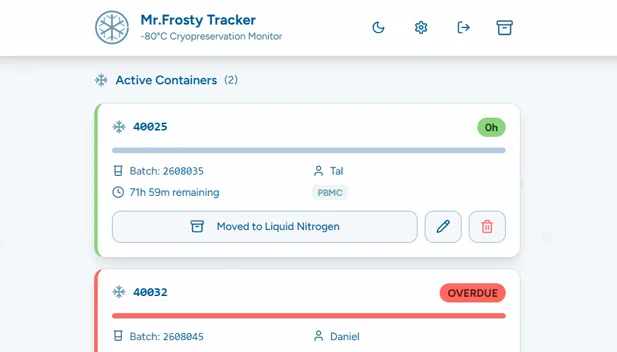
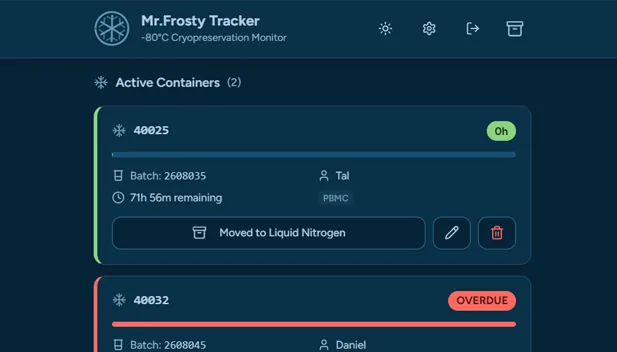
Cryo-container Tracker

View app
Problem
Tracking Mr. Frosty cryopreservation containers in regulated environments is often fragmented and difficult to manage.
Solution
Built an application for facility containers with scheduling, reminders, submission flows, and upload support for daily use.
Outcome
Simplified container tracking and reduced the friction of routine operational follow-up.
Workflow automation AI-enabled internal tools Operational problem solving Tracking and reminders
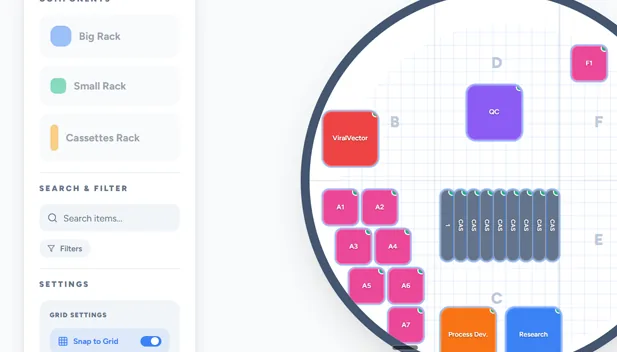
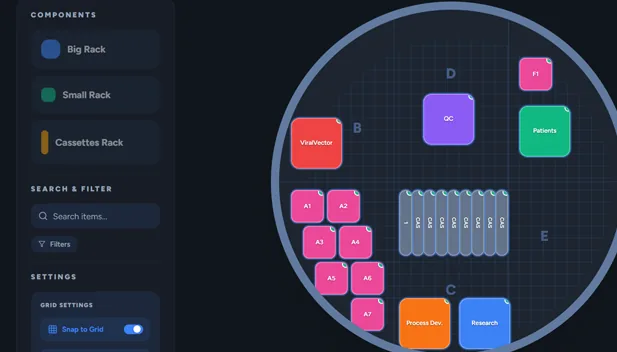
LN2 storage management interface LN2 storage management interface

LN2 Storage Management

View app
Problem
Teams need a clear, reliable way to map liquid-nitrogen storage and locate biological material across tanks, racks, boxes, and positions.
Solution
Built a visual storage-management application that makes inventory structure, capacity, and sample locations easier to understand and maintain.
Outcome
Improved storage visibility and reduced the friction and risk involved in routine sample-location workflows.
AI-enabled internal tools Inventory visibility Operational problem solving Rapid prototyping and deployment
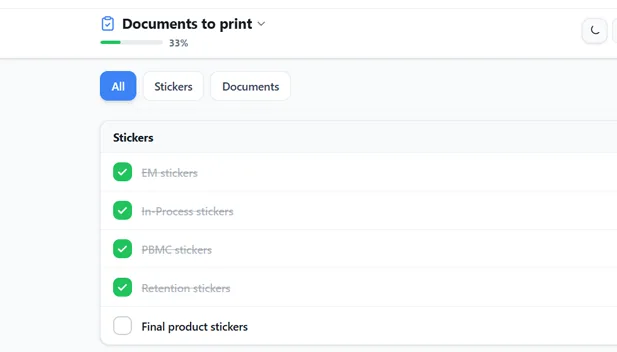
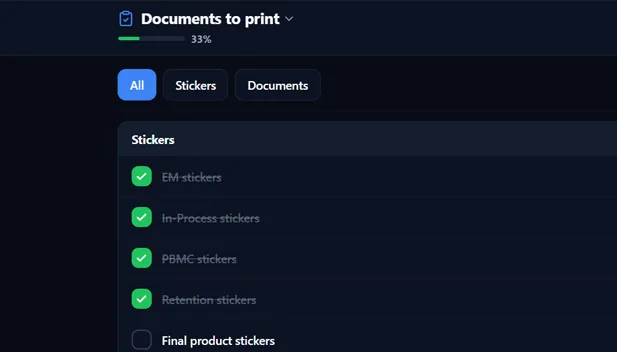
Cleanroom checklist application screenshot Cleanroom checklist application screenshot

Cleanroom Checklist

View app
Problem
Cleanroom readiness checks can become fragmented, inconsistent, and difficult to follow when managed through static documents.
Solution
Created a dynamic checklist that structures required activities and gives operators a clearer, repeatable completion flow.
Outcome
Standardized execution, improved task visibility, and supported more consistent operational readiness.
Process standardization Documentation-heavy workflows Adoption AI-enabled internal tools
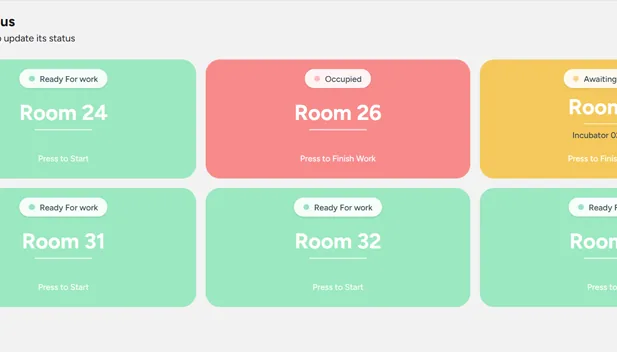
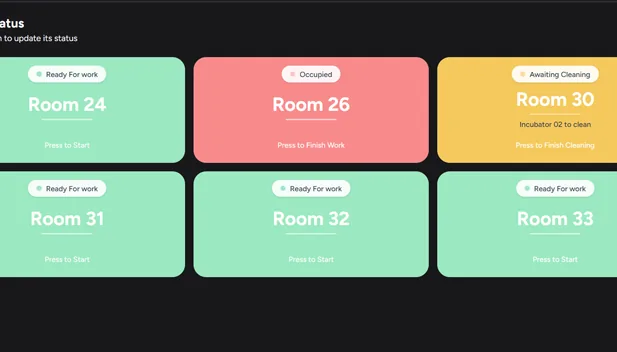
Cleanroom status dashboard screenshot Cleanroom status dashboard screenshot

Cleanroom Status Dashboard

View app
Problem
Operational teams need an immediate shared view of cleanroom status, readiness, and current constraints.
Solution
Built a focused visual dashboard that centralizes room status and makes important operational signals easy to scan.
Outcome
Created a clearer source of truth for coordination, faster issue awareness, and better day-to-day decision-making.
Operational visibility Reporting and dashboards Decision support AI-enabled internal tools
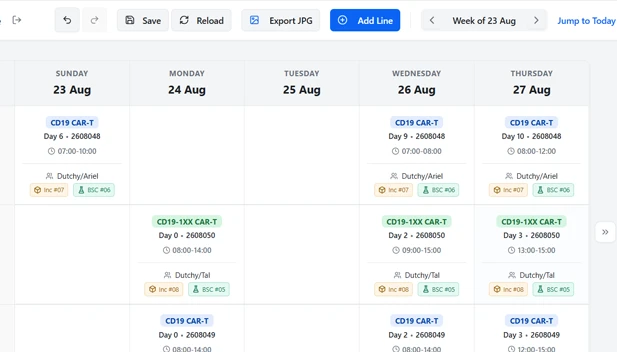
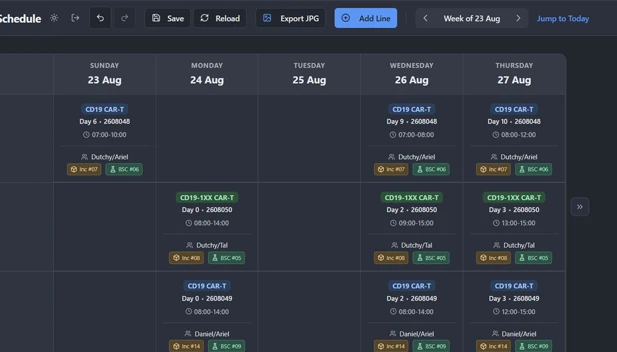
Weekly cleanroom schedule application screenshot Weekly cleanroom schedule application screenshot

Weekly Schedule

View app
Problem
Weekly laboratory work requires coordination across people, activities, rooms, and shifting operational priorities.
Solution
Developed a shared scheduling tool that organizes weekly activities in one accessible, structured view.
Outcome
Improved alignment, reduced scheduling ambiguity, and made dependencies and workload easier to coordinate.
Scheduling and coordination Cross-functional alignment Workflow automation AI-enabled internal tools

More Projects

Side builds.

Smaller builds that stretched a skill - product design, game systems, and creative AI work. Evidence of rapid prototyping and shipping, more than of operations.

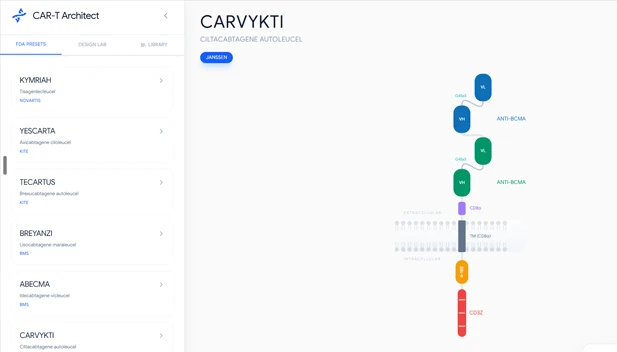
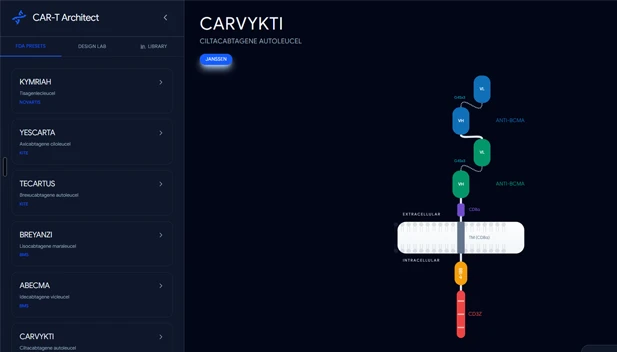
CAR-T Structure Architect interface screenshot CAR-T Structure Architect interface screenshot

CAR-T Structure Architect

View app
Problem
Researchers need an easier way to visualize, compare, and communicate CAR-T construct designs.
Solution
Built an interactive design tool for constructing CAR-T architectures with predefined clinical constructs and configurable domains.
Outcome
Enabled rapid visualization and clearer communication of complex biological designs.
Rapid prototyping and deployment Product design Biotechnology Visual tools
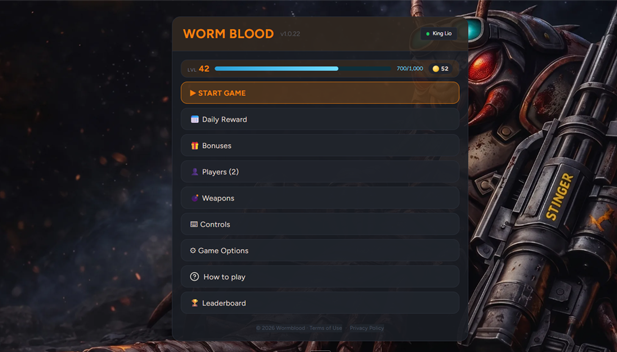
Worm Blood multiplayer game screenshot

Worm Blood - Multiplayer Game

View app
Problem
Create and launch a complete multiplayer game without a formal game development background.
Solution
Designed gameplay mechanics, progression systems, UI concepts, and user experience while using AI coding agents to accelerate development and iteration.
Outcome
Launched on Google Play and demonstrated full product lifecycle ownership from idea to production.
Rapid prototyping and deployment Product design AI-assisted development Full product lifecycle

Capabilities

One capability set, three uses: discovery, implementation, adoption.

The same capabilities run through the case studies above, the business services, and the machine-readable layer AI agents read - so the story is the same wherever you look.

AI Opportunity Discovery

  • Workflow analysis
  • Bottleneck identification
  • Repetitive-work detection
  • Automation feasibility
  • ROI and value estimation
  • First-pilot selection

AI Implementation

  • AI agents
  • Document processing
  • Knowledge assistants
  • CRM and email automation
  • Reporting automation
  • API, MCP, and WebMCP integrations

Adoption

  • Rollout
  • Human-in-the-loop design
  • Training
  • Operational measurement
  • Change in regulated environments

Technical Execution

  • APIs and integrations
  • Web applications
  • Firebase and cloud services
  • Git and GitHub workflows
  • Hardware and WebHID integration
  • Testing and debugging

Day to day, I build with AI-assisted development tools:

Anthropic Claude Code Claude Design OpenAI Codex Google Gemini Google Antigravity Google Flow NotebookLM Suno Lovable Meta AI Grok

Background

Six-plus years of complex operations - the reason the AI work lands.

Before AI, I led teams and programs in clinical cell-therapy manufacturing: a documentation-heavy, regulated environment where every process has an owner, every bottleneck has a cost, and a new tool only survives if the people on the floor adopt it. That is the vantage point I bring to AI transformation - in a company or in a small business.

Complex operations and process ownership

Owned processes end to end - design, validation, daily execution - so I read a workflow from the inside, not from a diagram.

Team leadership

Led and developed the teams running daily operations, and know what adopting a new tool asks of the people doing the work.

Cross-functional coordination

Aligned physicians, researchers, quality, engineering, and operations around shared plans - the same alignment an AI rollout needs.

Documentation-heavy workflows

Ran on batch records, checklists, and procedures. Document-heavy processes are exactly where AI extraction and knowledge tools pay off first.

Bottleneck identification and risk management

Planned capacity, dependencies, and risk across multi-year programs - and know which steps can be automated safely and which need a person.

Implementation in regulated environments

Introduced new tools and process change under GMP constraints and made them stick - the hardest version of adoption there is.

Agent-Accessible Portfolio

Readable by humans. Usable by AI agents.

This portfolio is not only readable by humans. AI agents can discover my capabilities, inspect relevant work, and understand what business problems I can help solve - through an MCP server, WebMCP tools registered by this page, a REST API, and plain markdown. No authentication, no cost, and every message reaches a real person.

Capability discovery

Experience, skills, projects, and domain expertise as structured data - the same content humans see, generated from this page.

get_profile list_projects get_ai_transformation_services

Problem matching

Describe a business workflow and get back whether my background fits, the closest projects, the likely solution approach, and an indicative scope.

analyze_business_problem suggest_ai_opportunities assess_automation_candidate estimate_ai_project_scope get_relevant_case_studies

Engagement

How to contact me, and a way to submit a business problem or opportunity that lands with a human who replies.

request_ai_opportunity_call contact_recruiter

Try it

Ask your AI agent if Tal can help

Paste this into any AI assistant that can connect to MCP servers - Claude, ChatGPT, Cursor, and others - and replace the bracketed part with your own workflow.

Connect to Tal Ogen's MCP server at https://talogen.dev/mcp (streamable HTTP, no auth). Here is how my business workflow works: [describe the workflow - what happens, who does it, how often, and which tools are involved]. Call analyze_business_problem with that description, then tell me whether Tal's experience is relevant to solving it, which of his projects are closest, what a first pilot might look like, and how to engage him.

No MCP-capable assistant? Any AI chat can read talogen.dev/llms.txt and the services endpoint instead. Browsers that implement WebMCP get the same tools straight from this page.

https://talogen.dev/mcp MCP server · streamable HTTP · no auth · 12 tools

In short

What I Bring

Operations-first problem finding

I start from how the business actually runs - the workflow, the bottleneck, the repetitive task - and only then ask where AI fits. Six-plus years of leading complex, regulated operations is the lens.

Hands-on AI implementation

I design and build working solutions - agents, document processing, knowledge assistants, and integrations over APIs, MCP, and WebMCP - so every recommendation is grounded in what can actually ship.

Adoption and measurement

I lead change through to daily use: human-in-the-loop design, training, and measuring the outcome against the starting point - whether the setting is a company team or a small business.